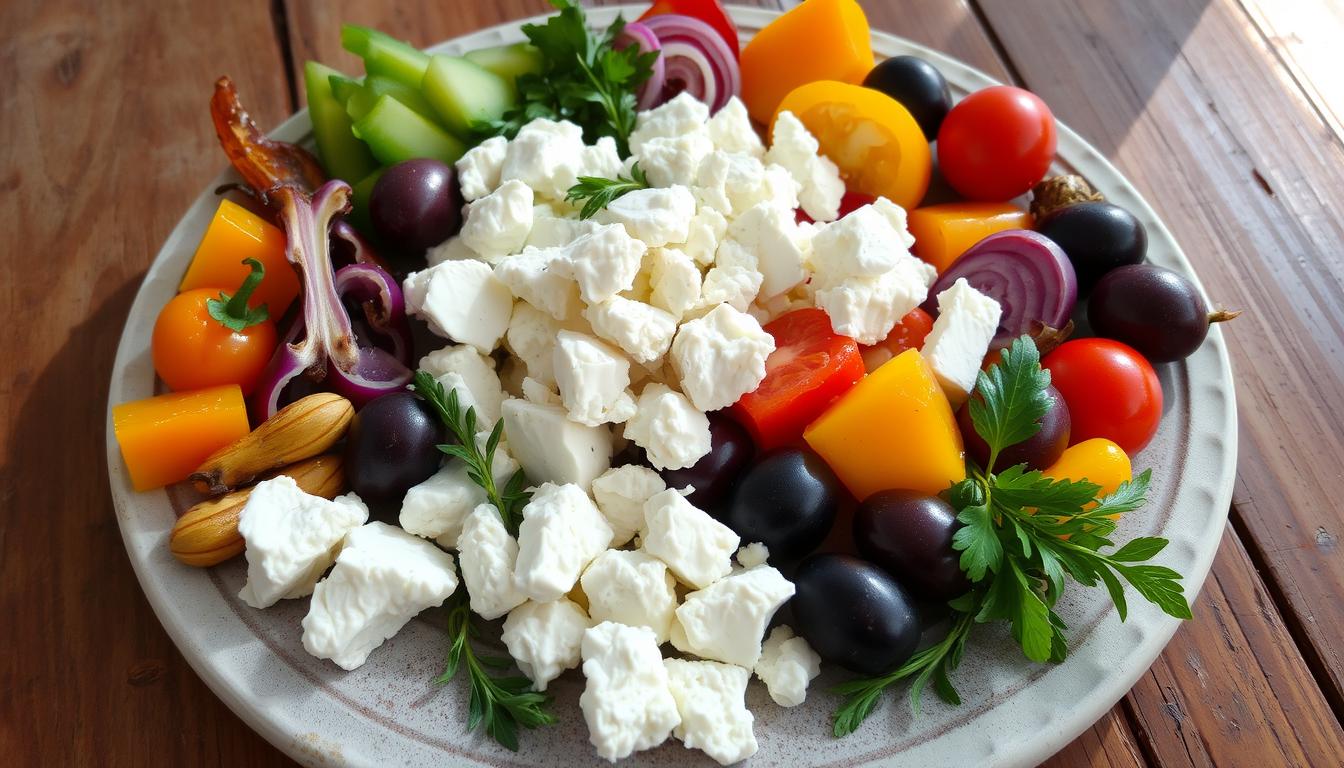
Discover the Versatility of Feta Cheese
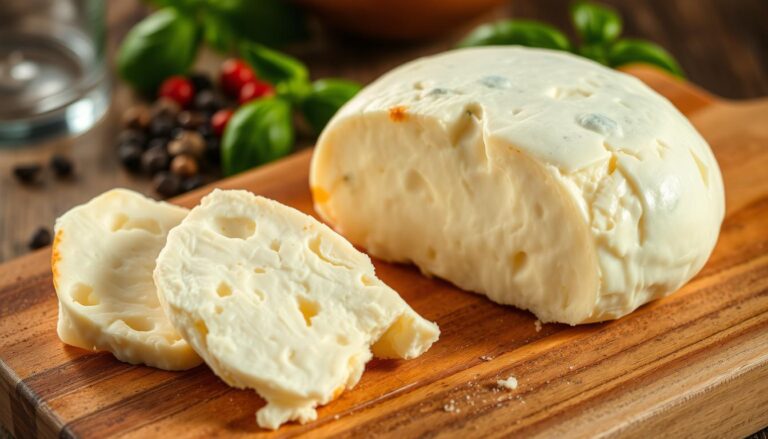
Feta cheese comes from Greece and is loved for its tangy taste and crumbly feel. It’s a key part of Greek food and a favorite globally. The best feta is sought for its unique flavor and how it can be used in many dishes1.
A 1-ounce serving of feta cheese has 76 calories, 4 grams of protein, and 6 grams of fat. It’s a healthy choice for salads, sandwiches, and more, offering a tasty and nutritious option1.
Feta is usually made from sheep’s milk or a mix of sheep’s and goat’s milk. This gives it a tangy, slightly sweet taste. People often say it’s salty, a bit acidic, fresh, and refreshing2.
Key Takeaways
- Feta cheese is a versatile ingredient that can be used in a variety of dishes, from salads to pastries.
- The best feta cheese is made from sheep’s milk or a mixture of sheep’s and goat’s milk.
- Feta cheese is a nutritious addition to meals, with a 1-ounce serving containing 76 calories and 4 grams of protein1.
- Feta cheese is a popular type of cheese that originated in Greece and is known for its tangy flavor and crumbly texture.
- Feta cheese can be used in various recipes, such as salads, omelets, quiches, pizzas, and dips, showcasing its culinary flexibility2.
- Feta cheese is a great option for those looking for a flavorful and healthy cheese to add to their meals.
The Rich History of Feta Cheese
Feta cheese has a long history, dating back to ancient times. It is mentioned in many historical texts3. Its roots are deeply in Greek tradition, with evidence of its making dating back to ancient times.
The making of feta cheese uses traditional methods. It involves sheep’s milk or a mix of sheep’s and goat’s milk4. This method has been passed down through generations. It is mainly made in certain regions of Greece.
Because of its long history and cultural importance, feta cheese has a special status in the European Union3. This status means only cheese made in specific areas of Greece, using traditional methods, can be called feta.
Ancient Origins in Greece
The origins of feta cheese go back to the 8th century BC. The first written mention of it is in Homer’s Odyssey4.
Traditional Production Methods
Traditional methods use whole sheep milk or a mix of sheep and goat milk. No more than 30% goat milk is allowed3.
Protected Designation of Origin Status
Feta cheese has had a PDO status since 2002. The European Commission granted this to protect its geographical origin5.
For more info on feta cheese’s history and making, visit
The history of feta cheese shows Greece’s rich cultural heritage. It has been a key part of Greek cuisine for centuries4.
What Makes Feta Cheese Unique
Feta cheese is special because of its unique mix and how it’s made. It’s often made from sheep’s milk or a mix of sheep’s and goat’s milk1. This mix gives feta its tangy taste and crumbly feel, making it loved by many.
The way feta cheese is made is also interesting. It takes at least two months to ripen6. The milk used must have at least 6% fat6, which adds to its creamy taste. Plus, feta is packed with nutrients like calcium, phosphorus, and vitamin B121, making it healthy to eat.
Some key traits of feta cheese are:
- Tangy, slightly salty flavor
- Crumbly, grainy texture
- High nutritional value, with a 1-ounce serving providing 14% of the Daily Value (DV) for calcium1
Feta’s unique taste and texture make it a valuable ingredient in many dishes.
The Production Process of Authentic Feta
Making feta cheese is an art that needs a lot of care. It starts with picking the best milk. Then, it’s curdled and shaped into the feta form7. Traditional feta is made from 100% sheep’s milk or up to 30% goat’s milk7.
The milk is warmed to 90F (32C) before adding culture and rennet8. The curds are stirred gently for 20-30 minutes. They should feel like a poached egg8.
After that, the cheeses dry in the air for up to three days8. This step is key for feta’s tangy taste and crumbly texture7.
Here are the main steps to make feta cheese:
- Milk selection and preparation
- Curdling and molding
- Aging and brining
The aging can last weeks or months. The cheese is kept in salt brine during this time7. This step is vital for quality feta cheese.
For more info on feta cheese production, check out cheesevibes.com. They talk about cheese types and how they’re made. The best feta comes from a traditional process that focuses on quality8.
Nutritional Benefits of Feta Cheese
Feta cheese is packed with nutrients and offers many health benefits. It’s a great source of calcium, which is key for strong bones. It also has a lot of protein, important for muscles9. Plus, it’s rich in vitamins, like vitamin B12, and has probiotics for better digestion and immunity10.
Here are some key benefits of feta cheese:
- High in calcium for strong bones9
- Rich in protein for muscle health10
- Has probiotics for better digestion and immunity9
- Contains CLA, which may help with weight management10
When we talk about feta cheese nutrition, we must look at both the good and the bad. While it’s high in sodium, it can still be part of a healthy diet if eaten in small amounts9. The health benefits of feta cheese make it a good choice for those wanting to improve their health.
| Nutrient | Amount per 1-ounce serving |
|---|---|
| Calories | 769 |
| Protein | 5.3g9 |
| Calcium | 144mg10 |
Different Varieties of Feta Around the World
Feta cheese is known for its versatility, with various types made around the world. Traditional Greek feta is made with at least 70% sheep’s milk. Other countries have their own versions using different milks11. For example, Danish feta is made from cow’s milk and has a milder, creamier texture11.
Some notable feta cheese varieties include:
- Greek feta, known for its salty and tangy profile12
- French feta, typically mild and creamy12
- Bulgarian feta, made with sheep’s milk and a yoghurt culture, giving it a tangy taste11
These different types of feta cheese offer a range of flavors and textures. They are suitable for various dishes and recipes. Whether you’re looking for a traditional Greek feta or a more modern, artisanal version, there’s a type of feta cheese variety to suit your taste12.
| Country | Type of Milk | Flavor Profile |
|---|---|---|
| Greece | Sheep’s milk | Salty and tangy |
| France | Cow’s milk | Mild and creamy |
| Bulgaria | Sheep’s milk | Tangy |
With so many types of feta cheese varieties available, it’s easy to find one that suits your taste preferences and culinary needs11.
How to Select the Best Feta Cheese
When selecting feta cheese, look for a few key things. High-quality feta should be crumbly and have a tangy, salty taste13. For more tips, check out olive tomato online.
Also, think about where the cheese comes from. Real Greek feta is top-notch, made from sheep’s milk or a mix of sheep and goat’s milk13. Some great feta types include:
- Valbreso French Soft Sheep Milk Cheese, which scored 9/10 in ratings14
- Mt Vikos Traditional Feta, which scored 10/10 in ratings14
When you buy feta, make sure it’s in brine. This keeps its taste and texture good15. Also, check the price. For example, the 16-Ounce Block Cheese Packed In Brine Feta Cheese from Whole Foods is a good deal15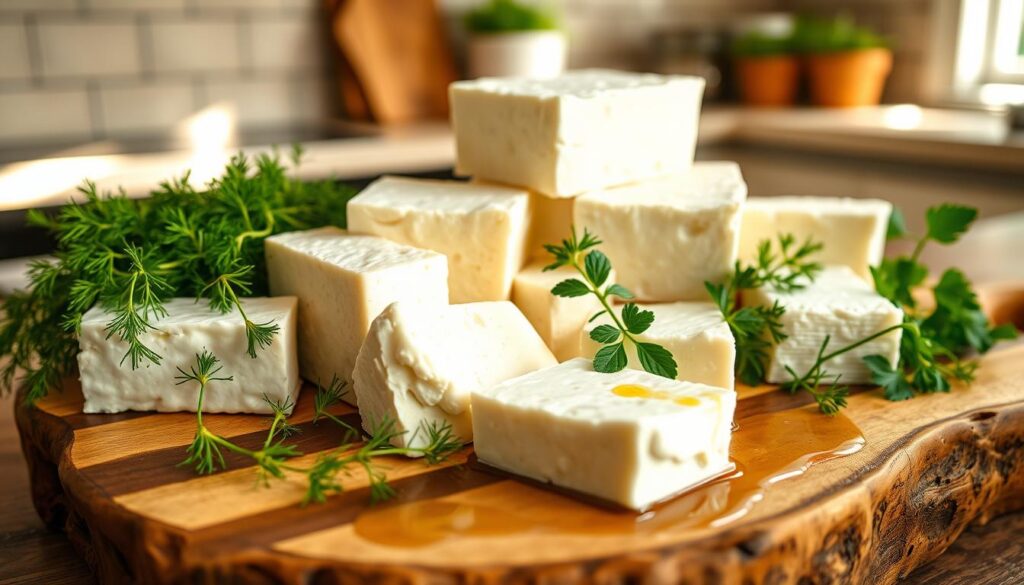
| Type of Feta | Rating | Price |
|---|---|---|
| Valbreso French Soft Sheep Milk Cheese | 9/10 | $10 |
| Mt Vikos Traditional Feta | 10/10 | $12 |
By keeping these points in mind, you can pick the best feta cheese for you. Enjoy its unique taste in many dishes.
Culinary Applications and Recipe Ideas
Feta cheese is great for many dishes, from classic Mediterranean to new recipes. It adds a unique taste and texture to food. There are over 20 ways to use feta in cooking, like in salads, main dishes, and appetizers16.
Some favorite recipes include baked feta pasta, stuffed chicken with spinach and feta, and Mediterranean bulgur bowls. These dishes are tasty and good for you, with some having just 197 calories per serving17. But, it’s important to watch the fat and sodium in some recipes17.
Here are some ideas for new feta cheese recipes:
- Baked feta pasta with cherry tomatoes and basil
- Spinach and feta stuffed chicken breasts
- Mediterranean bulgur bowls with feta, olives, and cucumber
Feta cheese is perfect for adding flavor to any meal. It’s great for both traditional and modern dishes. Its taste and health benefits make it a favorite for many cooks16.
In conclusion, feta cheese is versatile and can be used in many dishes. It’s a great choice for adding flavor and health benefits to your cooking. If you’re looking for new ideas or want to learn more about feta, there are many resources out there16.
| Recipe | Calories per serving | Fat content |
|---|---|---|
| Spinach and Feta Stuffed Chicken | 253 | 14g |
| Mediterranean Bulgur Bowl | 311 | 7g |
| Baked Feta Pasta | 406 | 12g |
Proper Storage and Handling Tips
Storing feta cheese right is key to keeping its taste and moisture. Feta in brine can last up to six months. But, it’s best to eat it within a week or two for the best flavor18. Keeping it in brine helps it stay moist and fresh longer18.
For your feta to stay fresh, follow the right feta cheese handling steps. Store it in the fridge, covered in brine, in a sealed container19. You can also add more brine with filtered water and salt to make it last longer18.
Here are some tips for storing and handling feta cheese:
- Store feta cheese in the refrigerator at a temperature below 40°F (4°C)19.
- Keep feta cheese submerged in brine to maintain its moisture and flavor18.
- Check the cheese regularly for signs of spoilage, such as mold growth or an off smell18.
By following these tips, you can enjoy your feta cheese for weeks. You can use it in many dishes without worrying about it going bad. For more info on storing and handling feta cheese, check out our blog.
Common Substitutes for Feta Cheese
Looking for feta cheese substitutes? There are many options. Goat cheese is great for recipes needing a tangy flavor20. Ricotta and cottage cheese are milder and work well in baking or as part of a cheese blend21.
Halloumi and Ricotta Salata are also good choices. Halloumi has a semi-firm texture and a salty taste20. Ricotta Salata has a crumbly texture and a slightly salty flavor20. For a non-dairy option, vegan feta cheese is a popular pick21. For more info, check out this resource.
Some top feta cheese substitutes are:
- Goat cheese
- Ricotta cheese
- Cottage cheese
- Halloumi cheese
- Ricotta Salata
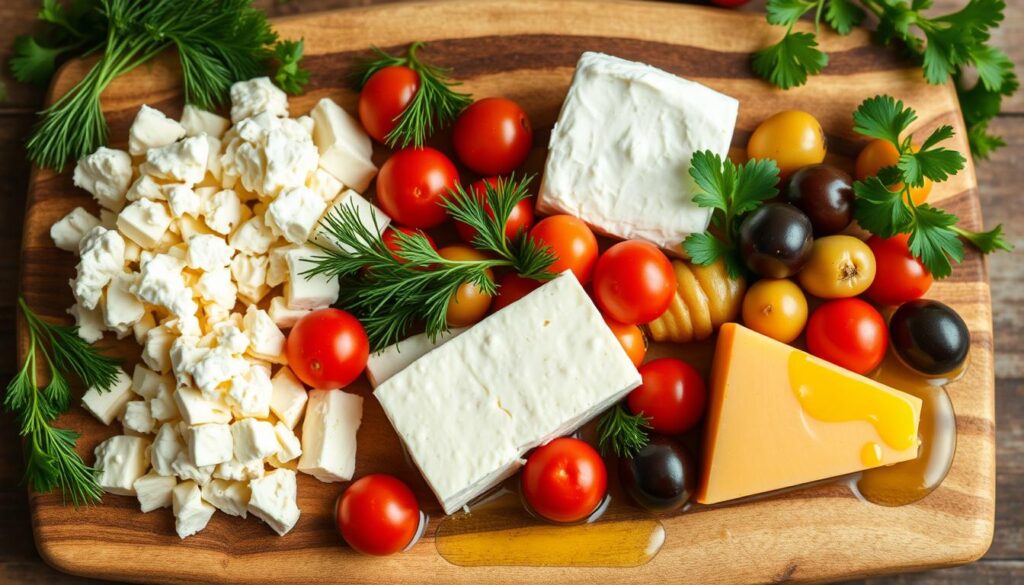
When picking a feta substitute, think about the flavor and texture you want. With so many options, you’ll find the perfect one for your dish20. Whether you prefer dairy or non-dairy, there’s a substitute for you21.
Conclusion: Embracing the Versatility of Feta in Your Kitchen
Feta cheese is a treasure in the kitchen, offering a variety of flavors and textures. It’s perfect for both traditional and modern recipes, making it essential in many kitchens22. Whether you’re a pro chef or a home cook, feta can make your dishes stand out and open up new culinary paths.
Feta’s tangy taste, health benefits, and many uses23 make it a cheese worth celebrating. It’s great in Greek salads and in creative fusion dishes, offering endless possibilities24. So, dive into the flavors of Greece and let feta cheese guide you on a tasty journey through the Mediterranean.
Feta’s versatility, nutritional value, and ability to boost both old and new dishes make it a must-have22. It’s perfect for adding a tangy touch to your favorite recipes or for starting new culinary adventures. Feta cheese is a reliable and tasty friend that will impress your taste buds.
FAQ
What is feta cheese made from?
Feta cheese is made from sheep’s milk or a mix of sheep’s and goat’s milk.
Is feta cheese made from goat milk?
Yes, some feta cheese is made mainly from goat’s milk. But it’s also made from sheep’s milk or a mix of both.
What is the best feta cheese?
The top feta cheese is the authentic Greek feta. It has the Protected Designation of Origin (PDO) status. This means it’s made the traditional way in certain areas of Greece.
What is feta cheese made of?
Feta cheese comes from sheep’s milk or a mix of sheep’s and goat’s milk. Sheep’s milk gives feta its unique taste and texture.