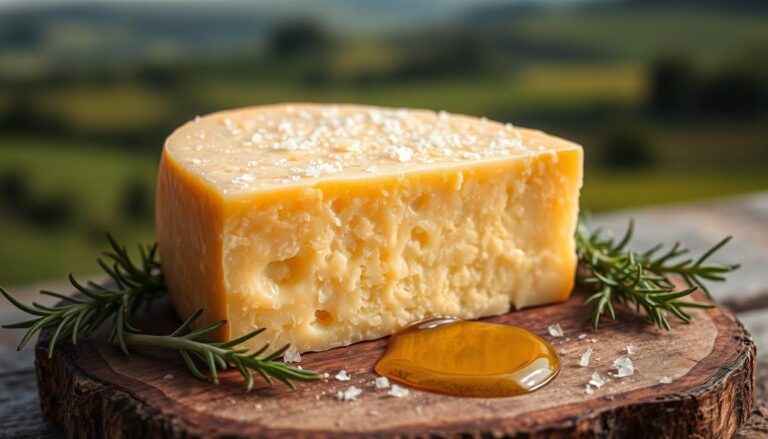
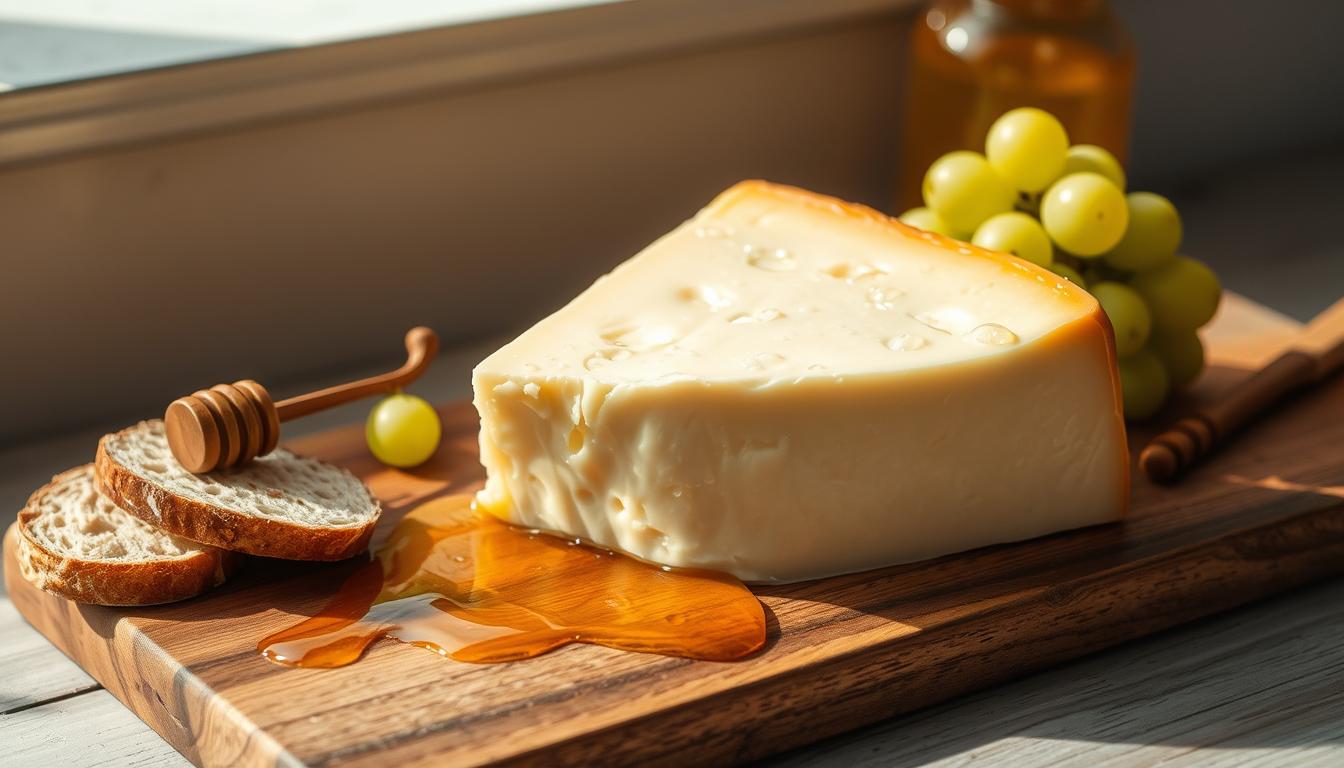
Discover the Rich Flavor of Taleggio Cheese
Taleggio cheese comes from the Val Taleggio region in Lombardy, Italy. It’s known for its creamy taste and soft texture. This makes it perfect for those curious about What is Taleggio Cheese1?. For more on cheese, check out Taleggio vs Brie and dive into the cheese world. Taleggio is one of the oldest soft cheeses, dating back to the 9th century1.
To enjoy Taleggio Cheese, eat it within one to two weeks for the best taste and texture1. Younger Taleggio is milder and buttery. Older cheese is spicier and more complex1.
Key Takeaways
- Taleggio cheese is a type of Italian cheese with a rich, creamy flavor and soft texture.
- It’s known for its Protected Designation of Origin (PDO) status, ensuring traditional production methods1.
- Taleggio cheese has a long history, dating back to the 9th century1.
- It’s often compared to other soft cheeses, such as Brie, but has a unique flavor profile2.
- The aging process for Taleggio cheese ranges from six weeks to several months1.
- Taleggio cheese pairs well with medium to full-bodied red wines, such as Merlot and Barbaresco2.
What is Taleggio Cheese and Its Origins
Taleggio cheese is a type of Italian cheese known for its unique taste and texture. It’s a favorite for many recipes, including Best Recipes with Taleggio Cheese. It comes from the Lombardy region in Italy, where it’s been made for centuries3.
The cheese is made by acidifying the milk, adding rennet, and shaping it into a square3.
Making Taleggio cheese is a detailed process that needs skill and care. It’s made from cow’s milk, which is high in fat and protein. This gives it a semi-soft texture and a smear-ripened exterior3.
The cheese ages for about 40 days. During this time, it’s washed with seawater sponge once a week. This helps develop its flavor and texture3.
Here are some ways to use Taleggio cheese in cooking:
- Lasagna with asparagus, which requires 300 grams of asparagus, 80 grams of butter, and 150 grams of Taleggio cheese4
- Potato gratin, which calls for 800 grams of potatoes and 200 grams of Taleggio cheese4
- Polenta croutons, which uses 250 grams of cornflour to prepare the polenta4
Taleggio cheese has a long history, dating back to the 9th century. It’s protected by a designation of origin, showing its importance in Italian food3. Its Taleggio Cheese Taste and Texture make it great for many recipes, including Best Recipes with Taleggio Cheese4.
Understanding Taleggio’s Distinct Characteristics
Taleggio cheese is loved for its creamy texture and mild, fruity taste. It’s a favorite among cheese lovers5. To enjoy its special qualities, it’s important to melt it right. This means heating it gently to keep its smooth texture and flavor.
When melted, Taleggio is great for many dishes. You can use it in pasta sauces or as a topping for pizza.
Many wonder if Taleggio cheese is strong. It really depends on what you like. Some find its earthy smell and taste strong6. But compared to other cheeses, Taleggio is generally mild. Its flavor is often described as buttery and fruity, with a bit of tanginess.
Some key traits of Taleggio cheese include:
- It has a high fat content, about 48 percent5
- It ages for 35 to 50 days5
- It’s made with raw milk and aged for at least 10 months6
Taleggio cheese is a unique and tasty variety. It can make many dishes more interesting. By knowing how to melt it right, cheese lovers can enjoy its full flavor5.
The Unique Taste Profile of Taleggio
Taleggio cheese is loved for its rich and delicate flavor. To learn What is Taleggio Cheese?, we must look at its origins and how it’s made. It’s crafted from raw or pasteurized cow’s milk from local farms. It ages for at least 35 days, which makes it special.
The taste of Taleggio includes fruit, nut, and earthy notes. This makes it different from soft cheeses like Brie. Taleggio has about 315 calories per 100 grams, with 26.2 grams of saturated fat and 19 grams of protein7.
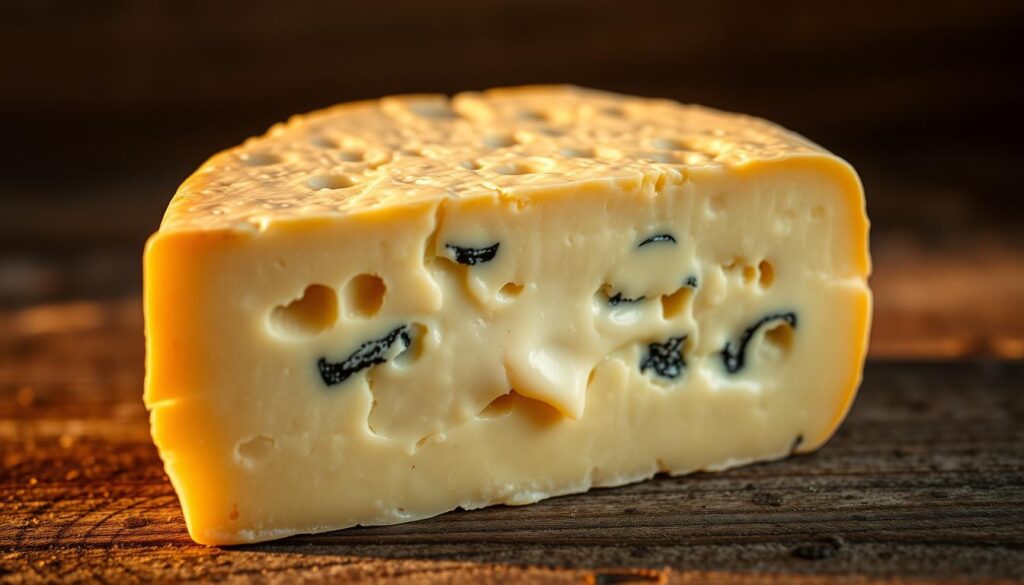
Taleggio’s texture is soft and creamy, great for spreading or in recipes. The aging process is key to its flavor and texture, lasting at least 40 days7. Its unique taste makes it a standout choice, whether paired or enjoyed alone.
Taleggio vs Other Soft Cheeses
Taleggio cheese is often compared to Brie and Camembert. But its Taleggio Cheese Taste and Texture make it unique. To enjoy Taleggio, you need to know how to eat it and what to expect from its flavor. Learning about different types of cheese helps you find the perfect one for you.
Taleggio is made from cow’s milk, like Brie, Fontina, and Gorgonzola Dolce8. It ages for 6-10 weeks, while Brie ages for 4-5 weeks8. This aging time affects its flavor and texture. Taleggio has a stronger aroma and firmer texture than Brie8.
100g of Taleggio has 19g of protein and 26.2g of fat9. A 50g portion has 21% of the daily sodium9. To enjoy Taleggio, you must understand How to Eat Taleggio Cheese and its rich flavor. Taleggio is a must-try for soft cheese lovers or those new to cheese.
Here’s a quick comparison of Taleggio with other soft cheeses:
- Taleggio: aged for 6-10 weeks, made from cow’s milk, with a rich and creamy texture8
- Brie: aged for 4-5 weeks, made from cow’s milk, with a soft and buttery texture8
- Camembert: aged for 3-5 weeks, made from cow’s milk, with a earthy and mushroomy flavor10
How to Select and Store Taleggio Cheese
To enjoy Taleggio cheese’s rich flavor, it’s key to pick and store it right. Look for a cheese with creamy white inside and a sticky rind. For the best recipes with Taleggio cheese, handle it gently to keep the rind intact. This helps it last longer11.
Storing Taleggio cheese properly is also crucial. Keep it in a cool, dry spot, like the fridge’s humid area. Use cheese paper or other wraps to cover it. Most fridges are too dry, which can harm the cheese11.
Before serving Taleggio cheese, take it out of the fridge about 1 hour ahead. This lets it warm up to the perfect serving temperature12. To how to melt Taleggio cheese properly, use low heat and stir constantly. These steps ensure you get the best taste and texture in your dishes.
- Store in a cool, dry place
- Handle the cheese gently to avoid damaging the rind
- Use cheese paper or alternative wrapping materials
- Keep the cheese in the higher humidity area of the refrigerator
By following these tips, you can keep your Taleggio cheese fresh and flavorful. Enjoy it in many best recipes with Taleggio cheese13.
Culinary Applications of Taleggio
Taleggio cheese is great for many dishes, like pasta sauces and pizza toppings. For pasta with taleggio and winter greens, you need 1 lb of fresh greens, 4 Tbsp of olive oil, and 4 cloves of garlic14. This mix makes a tasty sauce that goes well with taleggio’s creamy texture.
Compared to soft cheeses like brie, taleggio has a special taste. Taleggio vs Brie shows taleggio costs about $16 per pound, like brie15. Taleggio has 48% fat, more than many cheeses15. It’s great with herbs and spices, making dishes taste and smell amazing.
Taleggio is also good in risotto, polenta, and pizza. It can top dishes or mix into dough for extra flavor. For a risotto for 4-6 people, use 300g of rice, 40ml of white wine, and 1L of hot stock16. Cube the cheese for creamier risotto16. Taleggio’s rich taste and creamy texture enhance any meal.
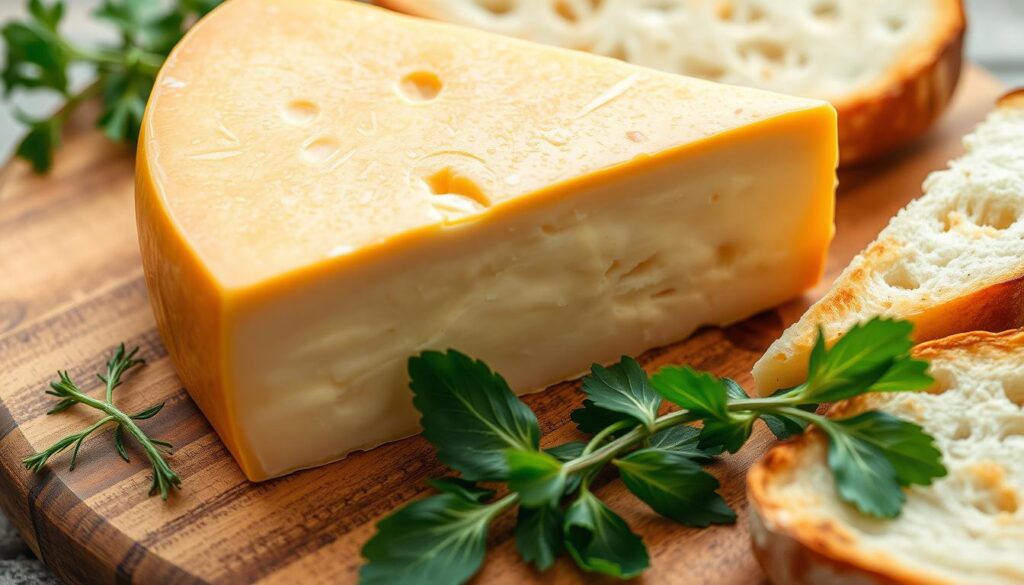
Taleggio cheese is versatile and adds unique flavor to dishes. Its creamy texture is perfect for many meals. Whether in pasta sauce or on pizza, taleggio is a great choice. Its rich taste and affordable price make it a favorite among cheese enthusiasts15.
Perfect Wine and Food Pairings with Taleggio
To enjoy the Taleggio Cheese Taste and Texture fully, pair it with the right wines and foods. There are many ways to enjoy Taleggio, but some pairings are better than others. For example, a light-bodied red wine like Schiava complements Taleggio’s smooth and fruity flavors17. Also, its creamy texture goes well with nuts and fruits, making it perfect for a cheese board18.
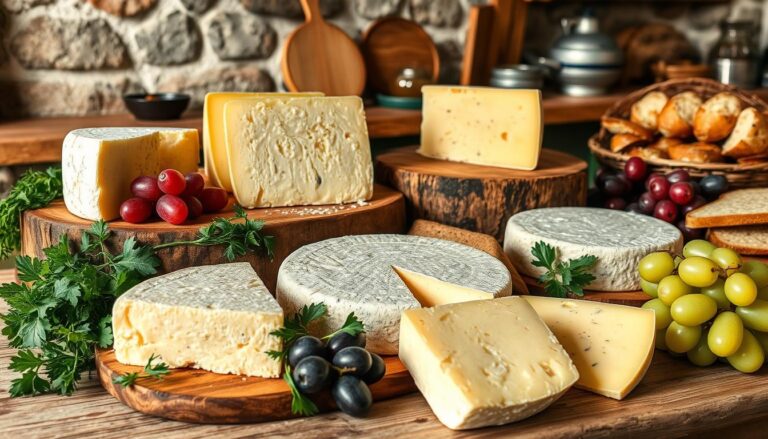
Creating a cheese board is a great way to experience Taleggio’s rich taste. Start with a mix of cheeses, including Taleggio, and add grapes, figs, and nuts. Choose wines like Lambrusco or Pinot Gris to pair with the cheese19. The goal is to balance flavors and textures so each item stands out.
Other great pairings for Taleggio include full-bodied wines like Barolo or Amarone della Valpolicella. These wines bring out the cheese’s rich and fruity tastes17. For a lighter option, try pairing Taleggio with a dry white wine like Pinot Bianco or Italian Merlot19.
The art of pairing wine and food with Taleggio cheese is about trying new things and finding the right balance. By understanding the Taleggio Cheese Taste and Texture and trying different pairings, you can enhance your dining experience. This way, you can fully appreciate the amazing flavor of this cheese18.
Health Benefits and Nutritional Information
Taleggio cheese is packed with nutrients and offers several health benefits. It’s a great source of protein, with about 19 grams per 100 grams20. It also has a lot of calcium, which is key for strong bones and teeth. The cheese has about 25g of fat per 100g, mostly monounsaturated fats, which can lower cholesterol21.
It’s important to eat Taleggio cheese in balance with a healthy diet. Americans over 14 should aim for 3 cups of dairy daily on a 2,000-calorie diet22. To properly add Taleggio cheese to your diet, know its nutritional value and health perks. Its protein helps muscles, and its calcium is good for bones.
Some ask, Is Taleggio Cheese Strong? Its flavor is rich and buttery, creamy yet delicate. To properly melt Taleggio cheese, heat it gently to avoid burning. Use low heat, stir constantly, or a double boiler. This way, you get to enjoy its taste and nutritional benefits.
In summary, Taleggio cheese is a nutritious and tasty addition to a balanced diet. It’s high in protein and calcium, making it great for muscle and bone health. Knowing its nutritional content and health benefits helps you use it wisely in your meals.
Conclusion: Embracing the Taleggio Experience
Taleggio cheese is a unique Italian delight that offers a remarkable culinary experience23. It has a rich, creamy texture and a complex flavor. This makes it perfect for many dishes, from simple cheese plates to gourmet entrees24.
Taleggio is versatile and a must-have for cheese lovers. You can pair it with a crisp white wine, melt it in a savory tart, or enjoy it on a crusty baguette. It’s sure to delight your senses23. Embrace the Taleggio experience and see why it’s loved by gourmands around the world.
Next time you’re at the cheese counter, try Taleggio. Enjoy its unique flavors and explore its many uses. Let this cheese take you to the rolling hills of Northern Italy24. With its rich history and exceptional taste, Taleggio is a true gem in the world of artisanal cheeses.
FAQ
What is Taleggio Cheese?
Taleggio is a soft, washed-rind cheese from Italy’s Lombardy region. It’s made from raw cow’s milk. It’s known for its creamy texture and unique flavor.
How does Taleggio differ from Brie?
Taleggio and Brie are both soft cheeses, but Taleggio tastes more savory. Brie is milder, with a buttery taste. Taleggio also has a firmer texture and a reddish-orange rind.
How should Taleggio Cheese be eaten?
Enjoy Taleggio on its own with bread or crackers. It’s also great melted in pasta, pizza, or grilled cheese for a creamy flavor.
What is the taste and texture of Taleggio Cheese?
Taleggio is creamy and slightly soft, with a mild, tangy taste. As it ages, it gets more complex and pungent, but stays creamy.
What are some of the best recipes using Taleggio Cheese?
Taleggio is great in many dishes. Try it on pizza, in risotto, pasta sauces, grilled cheese, and even desserts like cheesecake.
How do you properly melt Taleggio Cheese?
To melt Taleggio, heat it gently over low heat. This prevents it from becoming stringy or greasy. You can also bake or broil it for a creamy texture.
Is Taleggio Cheese a strong cheese?
Taleggio has a distinctive, pungent flavor. Some might find it strong, but it’s not as intense as some other cheeses. The flavor changes with aging and handling.